
Blogs

Motor-Level RLS Testing: Reducing Dependence on Vehicle-Level Validation

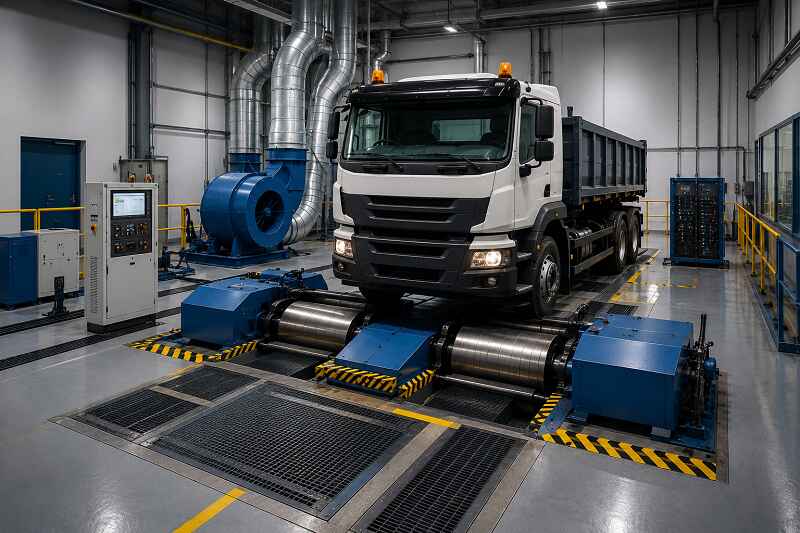
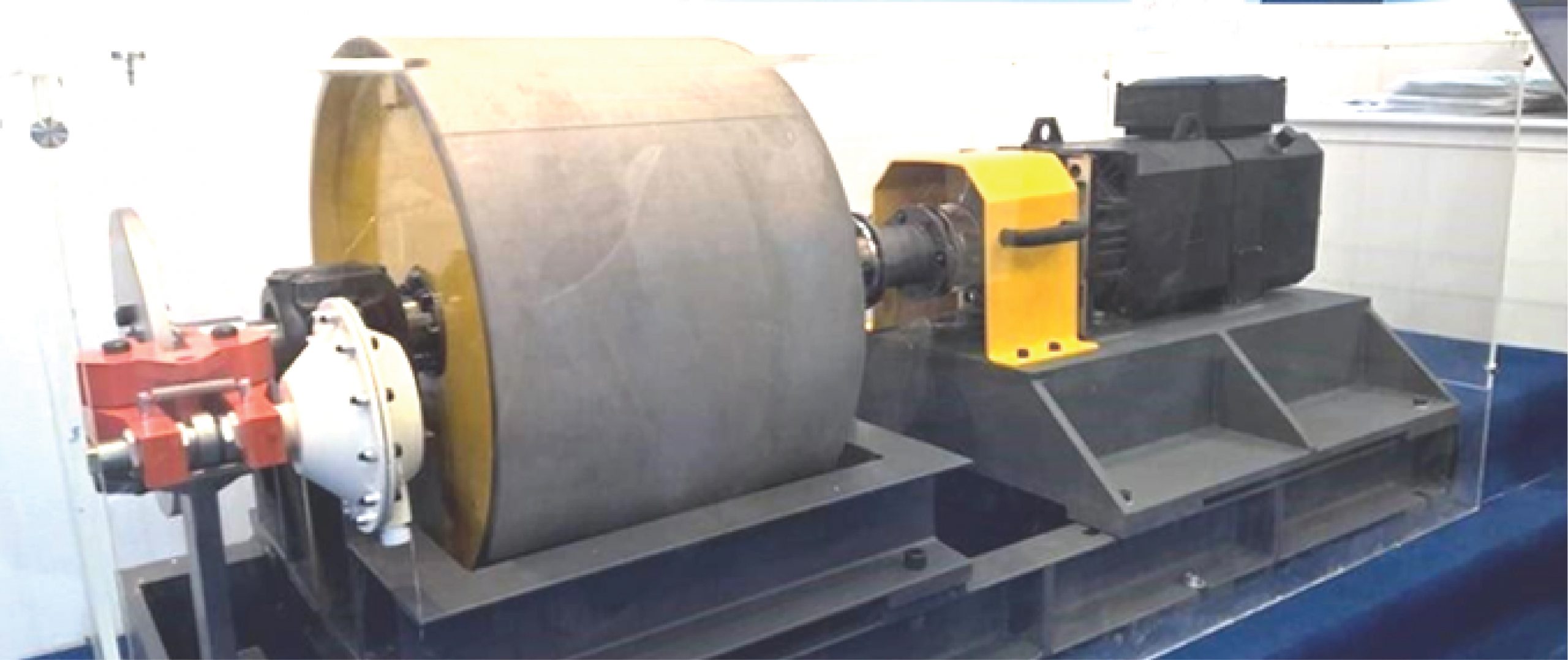
Motor-level RLS testing setup on an EV motor test bench

The rapid growth of electric vehicles has increased the demand for advanced EV Powertrain Testing systems. Manufacturers are now focusing on high-performance validation, durability testing, energy optimization, and safety compliance to ensure reliable EV performance. However, testing modern electric powertrains comes with multiple technical and operational challenges.

With the help of advanced Electric Powertrain Testing Solutions, companies can improve efficiency, reduce downtime, and accelerate product development cycles. In this article, we explore the major Challenges of EV Powertrain Testing and the best solutions for overcoming them.

Understanding Electric Motor Testing

EV Powertrain Testing involves validating the performance, efficiency, reliability, and safety of electric motors, controllers, batteries, transmissions, and integrated vehicle systems. Advanced Motor Testing Systems are used to simulate real-world operating conditions and evaluate motor behavior under different load cycles.

Modern Electric Motor Testing helps manufacturers:

  • Improve EV efficiency and performance
  • Validate motor durability
  • Optimize energy consumption
  • Ensure compliance with automotive standards
  • Reduce development time and testing errors

Challenges of EV Powertrain Testing and Validation Solutions

1. Complex Integration of Multiple Testing Components

One of the biggest EV Powertrain Testing Challenges & Solutions areas is integrating motors, batteries, inverters, controllers, and software systems into a single testing environment. Managing communication between multiple devices can become highly complicated.

Solution:

Advanced Powertrain Testing Solutions provide flexible automation platforms capable of integrating multiple devices into a unified testing ecosystem. These systems improve synchronization, automation, and testing accuracy.

2. High-Speed Data Acquisition and Synchronized Logging

Electric vehicle motors generate massive amounts of real-time performance data. Traditional testing setups often struggle with high-speed synchronized data logging.

Solution:

Modern Motor Testing Platforms for EV Manufacturers support synchronized data logging up to 1 kHz sampling rates. This allows engineers to capture accurate motor behavior, thermal conditions, torque variations, and efficiency parameters in real time.

Benefits:

  • Faster troubleshooting
  • Accurate validation
  • Improved testing consistency
  • Better performance analysis

3. Scattered Data Management in Electric Motor Testing

Managing test data from multiple systems and formats becomes difficult during extensive Electric Motor Testing processes. Scattered data often slows down analysis and increases validation time.

Solution:

Centralized EV Motor Testing and Validation Solutions streamline data management through integrated dashboards and automated reporting tools. These systems help teams analyze results efficiently and maintain better traceability.

4. Testing Multiple Motor Types on a Single Test Bench

EV manufacturers often work with different motor types, including:

  • PMSM motors
  • BLDC motors
  • Induction motors
  • Hybrid powertrain systems

Testing each motor separately increases operational costs and complexity.

Solution:

Modern E-Motor Testing Solutions support various motor configurations within a single adaptable testing station. This flexibility helps reduce setup time and improves productivity.

Electric Powertrain Testing Solutions for Vehicle Simulation and Real-World Validation

5. Vehicle Simulation Challenges in EV Testing

Real-world driving conditions vary significantly depending on terrain, load, temperature, and driving patterns. Simulating these conditions accurately is a major challenge.

Solution:

Advanced Electric Powertrain Testing Solutions integrate Road Load Simulation (RLS) and vehicle simulation testing. These systems recreate real driving conditions and various duty cycles for accurate validation.

How motor testing improves EV efficiency:

  • Optimizes energy utilization
  • Enhances regenerative braking performance
  • Improves thermal management
  • Reduces power losses
  • Extends battery range

6. Compliance with Global Automotive Standards

EV manufacturers must comply with strict international automotive regulations related to safety, emissions, durability, and efficiency.

Solution:

Automated Powertrain Testing Solutions help manufacturers maintain compliance by ensuring consistent testing procedures, accurate reporting, and standardized validation protocols.

EV Motor Testing Solutions for Improved Reliability and Performance

7. Downtime and Inefficiencies in Traditional Motor Testing Systems

Conventional testing setups often involve manual intervention, longer calibration times, and higher maintenance requirements. This results in increased downtime and delayed development cycles.

Solution:

Modern Motor Testing Systems use automation-driven workflows, predictive diagnostics, and integrated monitoring systems to minimize downtime and improve operational efficiency.

Key Advantages:

  • Faster testing cycles
  • Reduced human error
  • Higher productivity
  • Improved reliability
  • Lower operational costs

8. Customized Report Generation and Analysis

Generating test reports manually can consume significant engineering time and lead to inconsistencies.

Solution:

Advanced EV Motor Testing and Validation Solutions offer customizable automated report generation in multiple formats. Engineers can quickly generate performance reports, validation summaries, and compliance documents.

Key Features of Advanced Electric Motor Testing Solutions

Modern Electric Powertrain Testing Solutions provide several advanced capabilities:

✔ Wide Range of Motor Support

Supports multiple motor technologies and testing requirements.

✔ Optimized Motor Efficiency

Improves overall motor performance while reducing energy consumption.

✔ Integrated Road Load Simulation

Enables realistic vehicle testing and performance validation.

✔ Flexible Automation Platform

Allows seamless integration with multiple testing devices and systems.

✔ High-Speed Data Logging

Provides synchronized real-time data acquisition for accurate analysis.

Why EV Powertrain Testing is Important for Future Mobility

As electric vehicles continue evolving, the importance of reliable EV Powertrain Testing becomes even greater. Advanced testing systems help manufacturers:

  • Improve vehicle performance
  • Enhance safety and reliability
  • Accelerate product development
  • Optimize motor efficiency
  • Reduce operational costs
  • Ensure compliance with global standards

With intelligent Electric Motor Testing and advanced Powertrain Testing Solutions, EV manufacturers can build more efficient, durable, and high-performing electric vehicles for the future.

For companies focused on innovation and scalability, investing in robust EV Motor Testing and Validation Solutions is no longer optional — it is essential for long-term success in the evolving electric mobility industry.

Struggling with complex EV validation challenges?

Upgrade to advanced EV Motor Testing and Validation Solutions designed to simplify integration, improve data accuracy, and reduce development time.

Connect with us to transform your EV testing process with precision-driven solutions.

 

If you’ve spent any time validating EV powertrains, you already know the pain point: vehicle-level testing works, but it’s slow, expensive, and hard to schedule. Every test needs a full vehicle, a chassis dynamometer, and a long queue behind it. For teams trying to iterate quickly on motor performance, that’s a bottleneck.

Motor-level RLS testing is one of the more practical ways engineering teams are solving this. Instead of waiting for full vehicle-level access, you validate the motor directly on its own bench — with the automation and controls to make that data just as trustworthy. This post walks through what RLS testing actually involves, how it’s different from testing at the vehicle level, and what results look like when it’s implemented properly.

What Is RLS Testing in EV Motor Validation?

RLS testing — Road Load Simulation testing — reproduces the load conditions a motor would experience on the road, but does it at the motor level instead of inside a complete vehicle. Instead of driving a physical car through a test cycle, the motor sits on its own dyno, and the load, speed, and torque profiles it would see on the road are simulated directly against it.

The appeal is straightforward: you get realistic, road-representative data without needing a finished vehicle, a test track, or a chassis dyno slot. For EV motor testing specifically, this matters a lot, because motor and vehicle programs often run on different timelines — the motor is frequently ready to test well before the vehicle integration is complete.

Why Vehicle-Level Testing Alone Isn't Enough Anymore

Vehicle-level validation isn’t going away, and it shouldn’t. But relying on it for every iteration of motor testing creates real problems:

  • Availability. A finished, testable vehicle is a limited resource. Motor-level testing doesn’t need one.
  • Cost and time. Every hour on a chassis dyno is expensive. Running the same validation at the motor level is significantly cheaper per test cycle.
  • Iteration speed. Early-stage motor development benefits from fast feedback loops. Waiting for vehicle-level slots slows that down considerably.
  • Root-cause clarity. When something goes wrong at the vehicle level, it’s harder to isolate whether the issue is the motor, the drivetrain, or the vehicle integration. Testing the motor in isolation removes that ambiguity.

None of this replaces vehicle-level testing for final certification. But for the bulk of iterative validation work, it’s often unnecessary — and that’s exactly where motor-level RLS testing fits.

How Motor-Level RLS Testing Works on an EV Motor Test Bench

A motor-level RLS setup typically needs three things working together: a controller capable of running RLS test sequences accurately, a drive system that can handle the motor’s full operating range, and automated data acquisition so results are captured consistently without manual intervention.

In practice, this means upgrading a standard EV motor bench with an RLS-capable controller, integrating a drive unit that can support the motor’s requirements (including running it in both directions — more on that below), and layering in automated analysis so engineers get usable data quickly rather than spending hours processing raw logs by hand.

The result is a test bench that behaves, from a data standpoint, much closer to real-world road conditions — without needing an actual road, or an actual finished vehicle.

Ready to Upgrade Your EV Motor Test Bench?

Explore how iASYS can help enhance your existing motor test bench with RLS testing, bi-directional motor testing, drive-cycle validation, and automated data acquisition.

Bi-Directional Motor Testing and Drive Cycle Validation (IDC & WMTC)

Two capabilities matter a lot here, and they’re worth calling out specifically.

Bi-directional motor testing means the bench can drive the motor in both rotational directions, not just one. This matters because real-world driving isn’t one-directional — reverse, regenerative braking, and directional load changes all put different demands on a motor than simple forward-only testing does. A bench that can’t test bi-directionally is only telling you part of the story.

Standard drive cycle validation — running recognized cycles like IDC (Indian Driving Cycle) and WMTC (World Motorcycle Test Cycle) — lets engineers compare motor-level results against known, regulator-relevant benchmarks. This is what makes motor-level data credible rather than just convenient: it’s not a shortcut that sacrifices rigor, it’s the same rigor applied earlier and more efficiently.

Together, bi-directional capability and drive cycle support are what separate a genuinely useful motor-level RLS setup from a basic bench that only handles simple, one-directional load tests.

Motor-Level vs Vehicle-Level Testing: What Actually Changes

It’s worth being precise about what motor-level testing does and doesn’t replace.

What it changes: the volume of testing that needs to happen at the vehicle level, the turnaround time for each test iteration, and how early in the development cycle you can start getting reliable performance data.

What it doesn’t change: the need for final vehicle-level validation before certification, and the value of full-system testing for catching integration issues that only show up once the motor, drivetrain, and vehicle are working together.

The right way to think about it isn’t “motor-level testing instead of vehicle-level testing” — it’s “motor-level testing for most of the iteration, vehicle-level testing for the final checks.” That combination is what actually reduces cost and timeline without cutting corners on validation quality.

Real-World Results: What Motor-Level RLS Testing Delivered

In one recent motor test bench upgrade, adding RLS functionality — including an enhanced controller for RLS trials, a drive system supporting bi-directional rotation, and automated analysis scripts for real-time data acquisition — delivered measurable results:

  • 25–30% reduction in vehicle-level testing effort
  • 20–25% shorter product development timelines
  • 60% faster data analysis

These aren’t hypothetical projections — they’re outcomes from an actual EV motor test bench upgrade built to handle RLS testing, standard drive cycle validation, and bi-directional motor testing directly at the motor level. The point of building this kind of capability isn’t just “faster testing” in the abstract — it’s freeing up vehicle-level test slots for the work that genuinely needs them, while getting motor-level answers days or weeks sooner.

Is Motor-Level RLS Testing Right for Your EV Motor Testing Program?

This approach tends to make the most sense if any of the following sound familiar:

  • Your team is bottlenecked waiting for vehicle-level test access
  • You’re iterating on motor design and need fast, repeatable feedback
  • You need drive-cycle-validated data but don’t want to wait for full vehicle integration
  • Your existing motor test bench can only run in one direction, or can’t run standard drive cycles at all

If none of those apply — say, you’re already well past iterative development and mostly doing final-stage vehicle certification — vehicle-level testing may still be your primary need, and that’s fine. Motor-level RLS testing is a complement to vehicle-level validation, not a wholesale replacement for it.

For most EV motor testing programs, though, the practical answer is: the earlier and more often you can validate at the motor level, the less pressure your vehicle-level testing schedule carries — and the faster your overall program moves.

FAQs

What does RLS stand for in motor testing?

RLS refers to Road Load Simulation testing performed directly at the motor level, reproducing road-representative load conditions without needing a full vehicle.

No. It reduces how much vehicle-level testing is needed for iterative development, but final-stage certification and system-level integration checks still require vehicle-level testing.

Standard cycles such as IDC and WMTC can be run directly on a properly equipped motor-level test bench.

In many cases, an existing EV motor test bench can be upgraded with an RLS-capable controller, a bi-directional drive system, and automated data acquisition — rather than replacing the bench entirely.

Final Thoughts

Motor-level RLS testing isn’t a shortcut — it’s a way to get vehicle-representative data earlier, more often, and at a fraction of the cost of full vehicle-level testing. For EV motor testing programs under pressure to move faster without compromising on validation quality, that combination is hard to beat.

If your current motor test bench can’t run bi-directional tests or validate standard drive cycles like IDC and WMTC, it’s worth asking whether an upgrade — rather than a full rebuild — could get you there.

Share the Post:
Scroll to Top