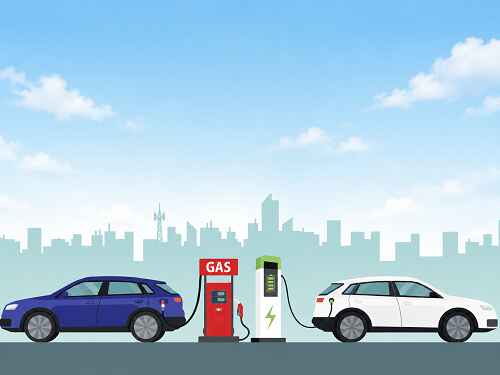
The global automotive industry is undergoing a revolutionary shift — from Conventional Internal Combustion Engines (ICE) to Electric Vehicles (EVs). This transformation, driven by sustainability goals and stricter emission norms, is redefining the way powertrains are designed, validated, and tested. However, the transition also brings new engineering complexities.
Traditional Hybrid and Engine Testing Solutions focused on combustion analysis, emissions, and fuel efficiency. In contrast, modern EV Testing Solutions demand precision across Battery, Powertrain & Vehicle Testing to ensure reliability, performance, and compliance.
This blog explores the key challenges faced by manufacturers in this transition and how advanced Motor Testing Systems, Battery Testing Solutions for E-Mobility, and Automotive Vehicle Testing Solutions enable a seamless shift to electrified powertrains.
1. From Conventional Powertrain to Electric Mobility
The ICE Era
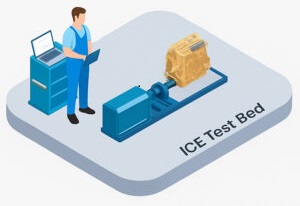
Conventional ICE testing revolves around fuel combustion efficiency, emission compliance, and component durability. Advanced Engine Testing Solutions and End-of-Line Vehicle Testing ensure every engine performs optimally before production release.
The EV Era
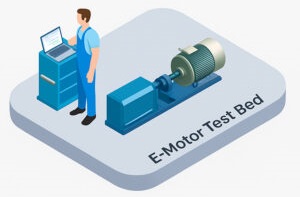
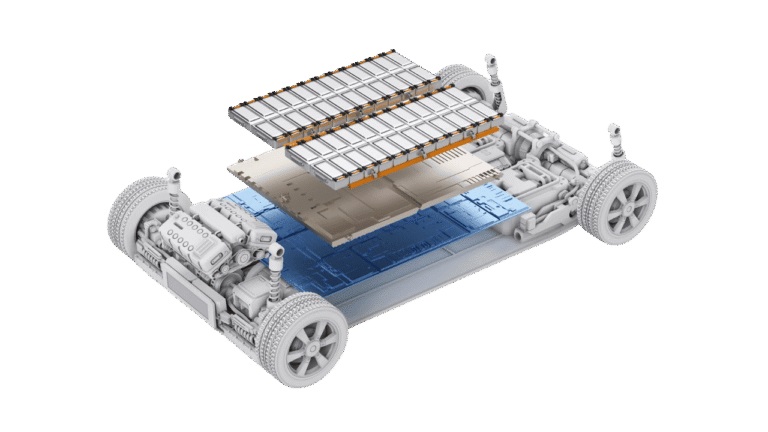
Electric vehicles, however, replace complex mechanical systems with simplified yet highly integrated electrical systems — including EV Battery Testing, Electric Motor Testing Solutions, and Powertrain System Validation. The focus has shifted from fuel injection to energy conversion, from exhaust management to thermal management, and from torque curves to power electronics.
2. Key Challenges in Powertrain Testing Transition
a. Complex System Integration
In ICE setups, testing focused on mechanical interactions. EVs introduce a new ecosystem involving dominance of Power electronics devices such as batteries, motors, inverters, and controllers — all of which must communicate seamlessly. Without integrated Automotive Vehicle Testing Solutions, achieving synchronization and efficiency becomes difficult.
b. Data Synchronization and Automation
High-frequency data capture is vital for validating Electric Motor Test Benches and Motor Performance Test Systems.
Modern testing platforms must manage synchronized data logging to ensure real-time analysis and consistent results across test cycles.
The iASYS Motor Testing Solution integrates multiple instruments, enabling efficient test automation, vehicle-level simulation, and report customization — improving productivity and accuracy.
c. Battery Performance and Safety
The EV battery is the heart of electric mobility. Testing involves evaluating energy density, lifecycle,SOC,SOH, charge/discharge patterns, and thermal performance.
Comprehensive Battery Testing Solutions for E-Mobility enable detailed analysis of:
- Battery Management System (BMS) validation
- Voltage, current, and temperature response
- Charge/discharge cycles and degradation rates (SOC, SOH)
- Short-circuit and overcharge
- government compliance safety standards test(AIS156)
Automotive Battery and Electric Vehicle Testing ensures that every battery pack meets safety, endurance, and performance requirements before integration into the vehicle.
d. Safety and High-Voltage Compliance
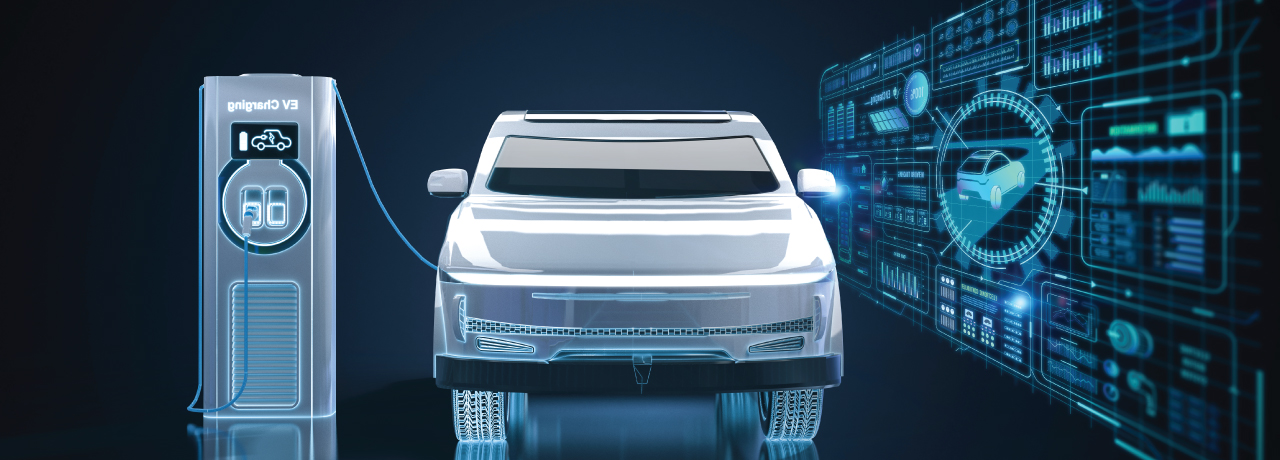
Testing EV components involves working with high-voltage systems and energy-intensive components. Advanced EV Testing Solutions prioritize safety through:
- Automatic fault detection
- Emergency shutdown systems
- Thermal protection and insulation monitoring
- Compliance with international safety standards
These measures help maintain secure environments during Electric Vehicle Testing and Electric Motor Testing Solution India setups.
e. Simulation of Real-World Conditions
Replicating real-world drive cycles is crucial for validating both ICE and EV systems. Integrated Road Load Simulation (RLS) within the Motor Testing System ensures that motor and inverter behavior accurately reflect on-road performance under various conditions.
3. The Evolution of Testing Systems
Hybrid and Engine Testing Solutions
While electrification is accelerating, hybrids continue to play an essential role in the transition. Hybrid and Engine Testing Solutions combine mechanical and electrical performance validation — integrating engine combustion tests with electric assist systems for parallel and series hybrid vehicles.
Motor Testing and Validation
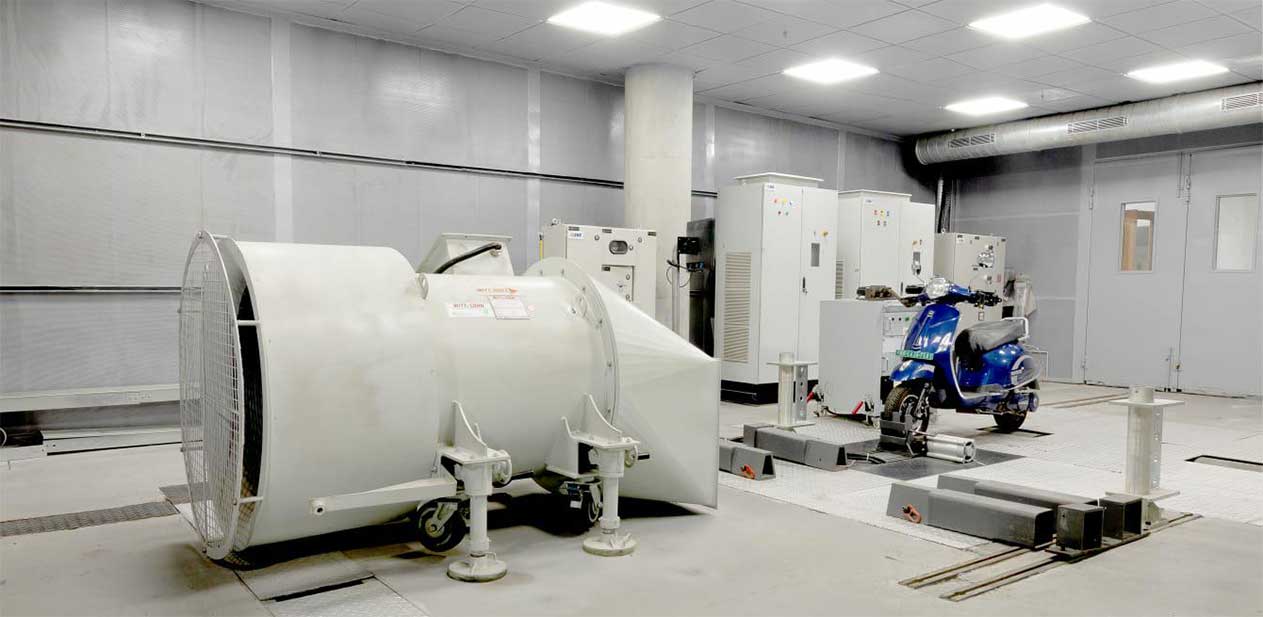
The Electric Motor Testing Solution from iASYS supports multiple motor types — from induction motors to permanent magnet synchronous motors.
Using the Electric Motor Test Bench, engineers can conduct:
- Efficiency mapping
- Thermal characterization
- Durability and vibration analysis
- Motor-level vehicle simulation
The Induction Motor Testing Solution and Motor Performance Test System offer modular configurations for different test requirements — ensuring flexibility, scalability, and compliance.
Battery and Powertrain Testing
Modern EVs rely on optimized energy flow between the battery, inverter, and motor. EV Battery Testing systems validate energy transfer efficiency, state-of-charge behavior, and long-term reliability. Battery, Powertrain & Vehicle Testing solutions ensure that these components work harmoniously to deliver real-world performance and range targets.
End-of-Line Vehicle Testing
Before production release, End-of-Line Vehicle Testing validates every system — mechanical, electrical, and digital.
Key benefits include:
- Real-time diagnostics and error detection
- Energy-efficient testing cycles
- Data traceability for quality control
Automated validation for reduced downtime
4. Hydrogen and Hybrid Powertrains: Bridging the Gap
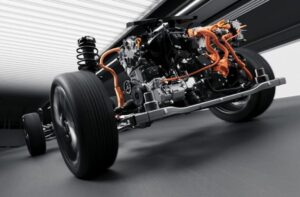
The journey from ICE to EV is gradual. Hydrogen Internal Combustion Engines (H2-ICE) and hybrid vehicles serve as transitional& combined technologies. Hybrid and Engine Testing Solutions support flexible configurations that validate both traditional and electrified systems in one integrated test cell.
Hydrogen ICE Testing Solutions add:
- Safety-driven hydrogen combustion analysis
- Multi-fuel compatibility
- Advanced emission monitoring
- End-to-end automation for accuracy
These flexible systems allow OEMs to explore hydrogen mobility while maintaining compatibility with existing powertrain architectures.
5. The Future of Vehicle Testing
As automotive technology advances, Automotive Vehicle Testing Solutions are becoming increasingly data-driven and intelligent. Future test benches and laboratories will integrate AI, machine learning, and digital twins to optimize testing workflows and predict performance outcomes.
Key trends include:
- Unified control across Battery, Motor, and Vehicle Testing systems
- Cloud-based data analytics for real-time insight
- Predictive maintenance powered by AI algorithms
- Modular scalability to adapt to future EV architectures
iASYS’s integrated test lifecycle management brings all these advancements together, ensuring that manufacturers achieve faster validation, lower costs, and enhanced reliability in EV development.
6. Why iASYS is the Preferred Partner for Testing Excellence
iASYS has been at the forefront of delivering turnkey testing solutions for the global automotive industry. With deep domain expertise in EV Testing Solutions, Hybrid and Engine Testing Solutions, and Automotive Vehicle Testing Solutions, iASYS ensures precision, safety, and efficiency at every stage of validation.
Our technology-driven solutions empower OEMs, research institutions, and propulsion developers to accelerate innovation while ensuring global compliance and superior performance.
Conclusion
The transition from Conventional ICE to Electric Vehicles represents a new era of mobility — one defined by innovation, sustainability, and precision engineering. However, this evolution brings new challenges in battery validation, motor performance analysis, and vehicle-level integration.
With advanced EV Testing Solutions and Motor Testing Systems from iASYS, manufacturers can overcome these hurdles confidently. From Battery Testing Solutions for E-Mobility to End-of-Line Vehicle Testing, iASYS ensures complete lifecycle validation — driving the industry toward a cleaner, smarter, and electrified future.